Showing posts with label Movies. Show all posts

Monday, August 16, 2010

Thoughts on same-sex parents - from flirting with disaster to the kids being all right.

After Judge Vaugh Walker handed down his decision that Proposition 8 - the legislation that banned gay marriage in California - was unconstitutional on August 4th, proponents of the legislation promised an immediate appeal. The majority of the arguments being shouted back-and-forth for appeal of the unconstitutionality ruling are primarily based on the grounds of the potential "harm" inflicted from lifting the ban: the harm that would come to the institution of marriage, the harm to tradition and personal morals, and, seemingly, the harm that will be inflicted on the children raised by same-sex couples. Listening to NPR the day that the decision was handed down, I heard callers basing their argument that children would be "harmed" if they were raised by same-sex couples on historical evidence: children have traditionally been raised by one mother and one father, so now why would we want to go around messing with this already functional system?

If tradition dictates that children should be raised by a man and a woman, then over 12 million families in the US are guilty of breaking tradition by functioning as single parent households. If the definition of an "adequate parent" is based on the presence of a man and a woman to raise a child, then women whose spouses have left them, or men whose partners have passed away, or ambitious single women who choose to adopt a child without the financial or emotional support of a life partner do not qualify as "adequate parents." What about families that have several generations living under one roof, families in which aunts and grandparents and siblings share in the parenting responsibilities? Or families in which one of the parents falls ill and can no longer share in the child-rearing responsibilities? Attempting to define the basis for what makes an adequate parent is such an incredibly personal and unique assessment to make. It is so frustrating that more people aren't offended by all of this "tradition" rhetoric that organizations like the National Organization for Marriage are throwing around, especially given the profound ignorance of the feelings of the children involved in this whole discussion.


Seemingly released apropos recent research that supports this notion that children of same-sex couples "are well-adjusted," Lisa Cholodenko's newest dramedy The Kids Are All Right attempts to depict what The New York Times dubbed "a generous, nearly note-perfect portrait of a modern family." If one knows the premise of the film, the title effectively conveys the outcome of the storyline in a fairly clear manner - that children of gay parents, despite popular belief, might just turn out to be pretty okay. Is it possible, in the face of the beliefs of Proposition 8 supporters, that non-traditional family models can actually produce children that can function in a dominantly heteronormative society? Is this film trying to tell us that despite the "abnormal" behavior of their parents, the children of same-sex partners might just be able to function as the normal, well-adjusted human beings that we want to have in society? That, in fact, the kids of lesbian parents might just be totally all right?

Interestingly enough, some affirmation of this notion came in a recent lonely late night with my Netflix Watch Instantly queue, which lead me to revisit the fairly forgotten mid-90s film Flirting with Disaster, a movie that unexpectedly touches - albeit somewhat ironically - on the parenting questions being raised by Prop 8 supporters. This frenetic David O. Russell comedy stars Ben Stiller before he was a male model conducting walk-offs refereed by David Bowie and threatening that "nobody makes me bleed my own blood," and - brief sidebar - reminds the viewer why some audiences fell in love with him in the first place.

The film focuses on the journey of neurotic Mel Coplin (played by Stiller) and his wife Nancy (Patricia Arquette) as they travel the country with their newborn son attempting to find his birth parents with the incompetent-but-flirtatious adoption agency employee Tina (Téa Leoni). Mel's adoptive parents Ed and Pearl Coplin (played to bickering perfection by George Segal and Mary Tyler Moore) are deeply hurt and defensive of his decision, thinking Mel's search for his birth parents is a slight on their skills as parents. The first few scenes of the film set up the audience for the true reasons behind Mel's myriad neuroses and his quest to find out the reasons behind them - his adoptive father Ed is perplexingly afraid of the wheel of cheese sitting on the living room table (Pearl later calls him "food-phobic), and his mother won't let her son finish a sentence without a loud and dramatic interruption.

As the film goes on, Tina brings the young couple to two different people who turn out not to be his parents - the last of whom subsequently enables Mel to back a semi truck into a post office. At the police station, the three run into Nancy's old high school classmate Tony (Josh Brolin) who works in the alcohol, tobacco and firearms division with his partner, Paul (Richard Jenkins). The five of them all go out to an Italian restaurant, where it is slowly and subtly revealed that Paul and Tony are not just partners in the ATF division of the station - they are also romantic partners who are potentially considering adopting a child.

Tony and Paul serve as comic relief for the remainder of the film, if not just for their sexual orientation: Tony (who admits he's bisexual) attempts to seduce Nancy by licking her armpit, and Paul ends up running half naked through the desert after taking two hits of acid that Mel's vindictive and bitter younger brother meant for him. But, to my surprise for its serendipity, the last few lines of the film turn the joke away from the same-sex relationship and over onto the potential reality of any family situation - that even a child who is raised by a man and a woman in a typically "traditional" household has every chance of being messed up and poorly adjusted.

In the last scene of the film, the whole group gathers outside the jail from which Ed and Pearl Coplin have been bailed out after being caught with hundreds of tabs of acid in their trunk (I'm telling you, just see the movie - this matter of the plot is far too tangential to my main point). Outside the jail, Pearl turns to Ed and, motioning toward Tony and Paul, says "I think those two men are homosexuals." Ed responds that the two are thinking about adopting a child, and expresses how "sick" someone would have to be to do that. Pearl agrees with Ed, adding "can you imagine the neurosis that child will have to deal with?" After an entire movie about a man who can't name his child until he's met his birth parents, who (it's mentioned) has problems performing during oral sex, whose mother exposes her breasts to his wife, and who has awkward and illicit sexual interactions with someone who's effectively his psychiatrist, devoting the last three lines of a film to this ironic comment on the nature of familial relationships struck me as oddly timely to all the yelling and hand-wringing being done by outspoken Prop 8 supporters about the effects on the psyches of the children of gay and lesbian couples.

I cannot describe the surge of feelings brought forth in me that the last minute of a film made 15 years ago managed to pinpoint the exact fear expressed by supporters of traditional marriage values today in 2010. I smiled, feeling like I was a part of some in-joke, when the fear of potential mental harm to the child of a same-sex couple is spoken by a dysfunctional, heterosexual couple that produced an entirely neurotic and idiosyncratic offspring. Sure, one could argue the mere fact that Mel was adopted in some ways makes his family a non-traditional one, but keep in mind that I am going off of the assumption that a traditionally defined family (according to certain supporters of the ban on same-sex marriage) is one that is lead by a man and a woman. One could also argue that, seeing as he is married and has a child and job, Mel is an ipso facto well-adjusted member of society, but I would beg to differ that his issues far outweigh his surface normalcy.

I find that the testimony of the adopted children of same-sex couples is hardly given any credence in this whole discussion, even though they are seemingly the ones who are so negatively effected by their family situation - and who, not surprisingly, tend to express positive feelings about their home life. This issue is so extremely personal, and anyone who attempts to try and dictate what is best for any one child or any one family needs to step back and take a good look at what they are implicating about other non-traditional families in various alternative circumstances. Is it appropriate to turn to a strange family in a crowded restaurant and attempt to scold their child for being messy or consuming their food too loudly? Is it anyone's responsibility but the parent of a child - be it birth or adoptive - to decide what is best for their children? If anything, the laws against gay marriage are what most effect the psyche of a child of a same-sex couple - it can't be anything but devastating to grow up watching your parents be discriminated against for simply loving each other and making some attempt at normalcy.

Thursday, April 15, 2010

A "Western" horror hallmark in Japanese cinema

The most recent issue of Bitch magazine included an article (not available on the web, sorry!) entitled "Hell is Older People—Aging as the ultimate cinematic horror" about the way in which Western horror films repeatedly utilize a scary, decrepit, manipulative old women character to strike ultimate fear in the minds of the youthful audience, the usual demographic for the horror genre. What author Alana Prochuk argues is that unlike the sick, devastating blow of an axe to the neck, aging is something that we as mortals can never escape - besides, how many of the individuals sitting in the audience have actually been threatened by a chainsaw-wielding maniac? Both the characters in the filmic world and the audience members in the seats of the theater face the imminent threat of our own mortality and death, and what better way to depict this fear than by placing it in large scale on the screen in front of us: a close-up of Mrs. Ganush's cataract-clouded eye and decaying teeth in Drag Me to Hell, the fossil-like state of Vera in the wonderfully graphic Dead Alive.


Even the titles are blatantly indicative of what is to be feared most about these the films: the thin, delicate line between between life and death, and the struggle to emerge from death's imminent, dragging pull toward a hellish (both literal and figurative) afterlife.

Prochuk goes on to cite other examples from Western cinema dating all the way back to 1974's Homebodies, a tale of "a sweet-seeming band of dispossessed senior citizens" who go to lengths to regain ownership of the home from which they have been evicted. In deciding to dedicate this article to Western cinema, Prochuk unfortunately missed out other opportunities for exploration found in horror films from filmmakers outside of the US and Western Europe, and I don't blame her - the majority of the films in her article focus on mainstream, major theatrical releases from the last twenty years or so, probably films that an American woman could have easily accessed in her local theater or found on the shelves of Blockbuster or the search engines on Netflix.

Japanese filmmaker Nobuhiko Obayashi's 1977 film Hausu (House), on the other hand, would not have been showing around the corner at the local theater, and is not even available on Region 1 DVD (after some initial research, I could find several Region 2 (UK) copies of the DVD on Ebay and Amazon, and although it is listed on Netflix one's only option is to "Save" the DVD for later) - the only way that I hear about the film was through a friend inviting me to a late-night screening at IFC Center in the West Village. This is, arguably, just around the corner for a few people, but as House was only screening for a single night and there were about twenty other people in the theater besides the five in our group I doubt many people have heard of or even know of this beautifully strange, self-aware psychedelic horror film about a group of seven high school girls who go to visit one of their elderly auntie's on break from school.


The seven girls who appropriately embody their names - Prof wears glasses and reads books, Kung-Fu kicks ass (with minimal clothing!), Sweet likes to clean, Fantasy has an overactive imagination, Gorgeous is real purdy, Melody plays the guitar and piano, and Mac probably likes McDonald's a little too much - are killed off one by one by either the paraplegic (or is she?) auntie or by her house itself. Although Gorgeous's auntie does not embody the Western horror trope of the decaying elderly character, there is certainly something a little creepy, a little off, and a little ephemeral about her presence.

While physically she is not unpleasant to look at, she still exists in the film as a reminder of what will happen to a girl who never gets married and rides out life through old age alone in her secluded, slightly dilapidated house. She is the ultimate "cat lady," with her cat Blanche doing her bidding and ceramic and painted representations of Auntie's faithful feline staring back at every turn. Auntie is positioned as a woman who wanted nothing more than to be married as a young girl, a figure in stark contrast to the seven youthful, cheerful and independent girls who come to visit her who each have their own unique (if stereotypically depicted) talent. Interestingly, the girls are all eventually killed by whatever thing it is they love the most: Melody is dismembered by the piano, Mac is decapitated while trying to fetch a watermelon from the well, and Sweet is crushed by falling linens and mattresses. Kung-Fu, physically the strongest of the group, is electrocuted by a ceiling lamp, a harnessed force that is impervious to human strength and could be the only thing to defeat a bodily force such as martial arts.


While the Western films mentioned in Prochuk's piece tend to physically portray the indications that old age is something to be feared through the withered faces of the elderly, Hausu does something slightly different by suggesting that resigning to the life of an old maid will drive one insane, distract them from youthful passions and desires, and trap one in a life of void of fulfillment. Prochuk suggests that "it's hardly surprising that many such films feature a female baddie" especially since the "problems" that come with aging - wrinkles, bad smells, loss of sexual drive and possibility for sexually attracting a mate - are treated in Western culture as much more dire for women than they are for men. I wonder if this trope only crops up subtly in Japanese film because, as filmmaker Andrei Tarkovsky once wrote, "The Japanese[...]see a particular charm in the evidence of old age." While Tarkovsky was discussing the Japanese affinity for Saba in their art, it can be said that almost any culture outside of the United States tends to hold much higher regard and respect for their elderly. This could be why the elderly woman found in Western horror films doesn't crop up quite the same way in Japanese horror; however, I still find Prochuk's argument applicable to the themes in Hausu.

All critical analysis aside, the screening of this film was one of the best experiences I've had at the cinema in quite some time. If the print travels to a theater near you, don't miss it.

Saturday, March 27, 2010

Thoughts on Bernard Cache's EARTH MOVES


Beginning his text announcing that "architectural images seem to be a good starting point" (2) for distinguishing between and navigating around the myriad visual elements that are present in our daily lives, Bernard Cache continues his text with an exploration of the philosophical and formal nature of architecture. But delegating the text to this definition - assigning Earth Moves the category of a "formal and philosophical study of architecture" - would be far too limiting, for he indeed discusses a great deal more than just forms and thought. Architecture is indeed inherently about forms and shapes, and is therefore also about geometry and mathematical interests. Cache discusses the city of Lausanne, a Swiss city located near the shores of Lake Geneva. The topography of the city has been profiled by filmmakers like Godard, who in a short film about Lausanne describes the city to have a visual problem or inconsistency that is to him Cezannian in nature - broad, disconnected spaces that make navigating the terrain problematic.


Cache chooses to profile the city of Lausanne due to its unique topography and geography that somehow dictated the construction of roads, buildings, works of art, and so on. However, Cache goes on to remind us that "in no case does the identity of a site preexist, for it is always the outcome of a construction" (15). For Cache, no destination has a predetermined future or path along which it necessarily will or must follow, an assertion that should strike a familiar chord with readers of Deleuze: one of the French philosopher's key concepts is a subscription to process ontology, which privileges being as becoming, as transformation, as constant change. Gilles Deleuze tends to prioritize difference over identity, a concept that is almost directly paraphrased in Cache's affirmation that once a being is defined or once a place has a definition, it is no longer capable of evolution. Remembering Todd May's definition of Deleuze's main question "how might one live?", Cache's own question regarding the development of architectural projects on a topographic space could possibly be summed up as "how might this space be altered?"

After attending class and discussing, albeit briefly, Cache's text and its significance to the world of critical architectural theory and Cache's relationship to Deleuze (they were contemporaries, even though Cache's text was not published until almost 12 years after it was written and only because Deleuze cross-referenced Cache's ideas in his own work, thus giving him notoriety), I found myself developing a new appreciation for Cache's approach to architecture and the interrelated realms of science, mathematics, and representational art. It was interesting to learn that not just Deleuze's ideas on the individual - or what he would call the becoming-human (so in this case, the becoming-site?) - are what influenced Cache, but also Simondon's embrace of individuation and his subsequent rejection of preformism, a rejection that he came to after his studies of physical matter led him to dismiss this idea of substance. A rejection of preformism can also be said to be a rejection of the preexisting identity of a geological site, something that Cache adamantly repeats throughout his text and his argument. I must say that this idea is quite appealing to me, especially because it expresses the possibility of unlimited potential, a potential that one would not normally assign to an inanimate object. In some ways, a rejection of preformism and an embrace of individuation opens the door for so much creativity, even if the site is already altered to a certain specification or a temporary definition of what it is at that moment; once a concrete structure is formed on a specific site, this does not mean that the structure is permanent or the only way to define the site. Instead, defining a site as capable of endless possibilities allows for impermanence, creativity, and growth in the eternal becoming-site.

You can also find this post on Immanent Terrain, the class blog for Art After Deleuze.

Wednesday, March 10, 2010

White guilt and White male paranoia

A response to Richard Dyer's "The Matter of Whiteness":

Richard Dyer begins his paper “The Matter of Whiteness” (1999) by discussing the central nature that racial judgments and racial imagery encompass in the contemporary world. He points to the “enormous amount of analysis on racial imagery in the past decades,” especially when it comes to analyses in postcolonial texts of the racial Other – that is, those who are other than White, for the majority of research and discourse about race centers on “any racial imagery other than that of white people” (539). He mentions the assumption employed by the media and authors of other textual works that categorize “whiteness” as synonymous with “human,” a category which he admits to utilizing in his own discussion of drag queens: Dyer mentions that in his analysis of characters from Car Wash such as the “fashion queen” and the “black queen” he fails to identify the “fashion queen” as White, falling into the trap of writing about “white people [as] just people” whereas Black individuals necessitate the signifier of their color (540). He draws upon other examples of this in mentioning the short descriptions of programs on television, reminding his reader that these two examples are in no way exhaustive.

Ultimately, Dyer’s piece can be read as a manifesto of how to attempt to discuss the issue of whiteness without repositioning it in the hegemonic, heteronormative space that it has encompassed for much (all?) of history. While attempting to iterate that White folks are not colorless and should be recognized as a categorization deserving of some attention, Dyer simultaneously asserts that whiteness should not be a newly claimed area of study – he identifies his fear that “paying attention to whiteness” will somehow “reinstate it” as a point of “centrality and authority” (542). He discusses the concept of white guilt, and how this guilt can “be a blocking emotion” that causes analyses of Whites to remain focused on how awful they have been in the past as opposed to “how exactly their image has been constructed,” (542) not suggesting that this history be ignored but should instead be only a part of the complicated reading of whiteness, and indeed of any racial category. A recent post to the online community Yay Hooray (scroll down to Lord Thuggingsworth's post) displays an example of a personification of this white guilt that does nothing to enhance the conversation.

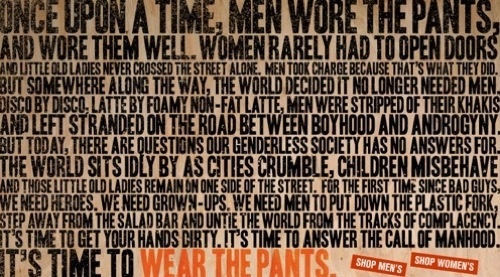
A point of interest in Dyer’s piece comes with his mention of the surge in “white male paranoia” (542) that manifests itself in print advertisements, television spots, and magazine articles as a product of White people feeling left out of the race discussion. This white male paranoia, Dyer states, is a product of “all this (all this?) attention being given to non-white subjects” (542) in the critical analyses of race in the media and in academia. A particular Newsweek article of the same name as the hegemonic fear discussed above begins by focusing on the actions of Michael Douglas’s character in the film Falling Down – a project contemporaneous to the magazine piece – who acts out in violent rage against people of color, including “whining panhandlers, immigrant shopkeepers who don't trouble themselves to speak good English, [and] gun-toting gangbangers” (Gates, 1993) in retaliation to and reaction for the termination of his job. Other examples of this paranoia can be seen in recent Docker’s print advertisements that attempt to reclaim a time when “men wore pants” and in a television spot for Ketel One vodka (see embed below) in which the image of a table full of White, upper-middle class males is accompanied by a voiceover maintaining “there was a time when men were Men” (presumably with a capital "M"), and that this manly, vodka-drinking experience is supposedly “inspired by 300 years of tradition.” Although one could easily read these examples from a feminist perspective, stating that these advertisements and filmic representations are a reclaiming of a masculinity taken from men by a recent shift of focus to the feminine, it is this “300 years of tradition” and the table full of white men that leads me to believe otherwise – that this is indeed not just a gender but also a racial issue.


A question that came to mind while reading Dyer’s piece has to do with the sustainability of his statement that the “media, politics, education are still in the hands of white people, still speak for whites while claiming – and sometimes sincerely aiming – to speak for humanity” (541) during an era in which the United States is being run by an African American man. The inherent naivety of this question is apparent even as it is being composed, but this was a question that was raised from similar statements in Shome’s piece as well: now that a Black man is the president of America, does this mean that the presidency can still be considered “the ultimate site of white masculinity” (Shome 2000; 369) so proclaimed by Shome? This is not to suggest that President Obama, being both Black and White, speaks for all Black Americans or all White Americans – nor that these two classifications encompass the entirety of racial identities found within the United States – but is this not a potentially encouraging step toward representation of not just the white race but the human race in the “politics” mentioned in Dyer, with Obama able to possibly function as a voice for a larger portion of humanity than is possible with the overwhelming majority of white voices usually found in politics and the media? I am not sure that this question can be answered adequately; I only attempt to bring up the disparities and small developments between the current era of the early 21st century and the late 20th century.

Thursday, February 18, 2010

Freud, the horror genre and "vagina dentata"

Just look at this. I said to myself back at the beginning of February, it's a new semester! That means, Katharine, you best be writing on that blog of yours a lot more than you did in the Fall, because you're only taking three seminars so you'll have allllll this time on your hands! No reason to not be writing every day on every topic you find interesting! You can DO IT!

And now just look at me. An entire week and a half has passed since my last entry. So much for staying focused.

Well, actually, I have been quite focused. Like, 180 pages of reading a week focused. I've been focused on so many papers and articles and books that don't require me to enter The World Wide Web™ in order to read them that I haven't been taking what I've been reading and moving my thoughts and ideas into cyberspace. And since my boyfriend will be in New York this weekend (starting tomorrow night! *doeslittledance*), odds are I won't even be doing much thinking about class at all. So here's an attempt to rectify my extreme inactivity.

The title for my Sexual Personae class this week is "Exploitation!" with the readings including an interview with subversive filmmaker Doris Wishman and a brief history of sexploitation films from the book Incredibly Strange Films, as well as two chapters from the text The Monstrous-Feminine: Film, Feminism, Psychoanalysis by Barbara Creed. The latter two chapters on a feminist look at Freud and Lacan and how their psychoanalytic theories can be applied to the horror genre are certainly a refreshing piece of psychoanalytic feminist film theory for someone who is quite burnt out on Laura Mulvey's defeatist attitude toward the helpless gaze inflicted upon women in cinema.

Creed is able to turn Freud's ideas of the castrated female - a quite passive and pathetic figure that, in Lacanian terms, represents "lack" due to her absence of a phallus - into an object that inspires fear in the male not because she represents the possibility of castration, but because she represents an active, potential figure who can castrate. For Creed, the female is seen as the castrating, not the castrated, with this fear of the castrating female usually established through the idea of the toothed vagina, or vagina dentata. The depiction of vagina dentata in many filmic forms - the mouth of a vampire, for instance, or the shark's mouth in Jaws, or the blood flowing from a hallway (The Shining), or Audrey II in Little Shop of Horrors - represents this fear of the castrating female, for the victims in almost all cases are primarily male. Some of the characters she notes as castrating female characters - the mother in Psycho, the story of Medusa and her head of snakes, Sharon Stone in Basic Instinct - had never taken on this dimension for me before, and I found it completely fascinating.


I thoroughly enjoyed her refusal to accept Freud overlooking the possibility of the female as castrating as opposed to castrated. Although, I do believe that her analysis does not do enough to challenge Freud's insistence on positioning the child figure as almost consistently male, never completely pursuing the idea of what a female child's process of identification might be upon the first sight of her father's genitals, and how this works into the concepts of viewing herself as either castrated or capable of castrating - or of being injured or lacking, or otherwise empowered.

I remember reading an essay in one of my mother's old issues of Bitch magazine that discussed a different aspect of women characters in the horror genre that has always stuck with me, but I am not quite sure where - or if - it fits in with Freudian concepts. This analysis I read positioned women in horror films not in the almost empowered(1) roles as a castrating figure, but as weak and easily possessed figures because of their vaginas, because of this orifice that allows possession by a foreign entity. In the case of The Exorcist or Poltergeist it is a demon or a spirit that possesses a female character, presumably because she is more susceptible due to her cavernous absence between her legs. With films such as The Evil Dead the forest literally enters one of the women as tree branches snake along the ground, raping and thus possessing and turning evil the female character through their entrance into her vagina. There was also something in the Bitch article about a menstruating woman, and how being a virgin in a horror film affects the outcome of the female character's ultimate conclusion, but I can't seem to remember the nuances. If anyone can point me in the right direction, or still has a copy of that magazine (*coughcough* Mom?) please, let me know. As for now, let me just say I highly recommend reading Creed. Those of you who are far better versed in the horror genre will probably get a lot more out of it than I did.

(1) This is not to imply that I believe the violent act of castration is empowering, or any violent act for that matter. I'm simply saying that this idea of the woman not as castrated - as in Freud - or as "lacking" - as in Lacan - but instead as in possession of the possibility of castrating allows the female to assume a far more active role because it is a far more frightening one for the male, therefore giving the female the slight upper hand in a formerly oppressed relationship to the male figure.

Monday, February 1, 2010

Congrats to Kathryn Bigelow!

From The Guardian:
in a low-key ceremony in Los Angeles, Kathryn Bigelow became the first-ever female winner of the Directors' Guild of America (DGA) award for best direction in a feature film.

This is an important moment: in the DGA's 62-year-existence no female director has ever won this award. Congratulations to Bigelow aside, this win now points her firmly in the direction of an Academy award: almost every DGA win in this category results in the same achievement at the Oscars.


This could mean, since the Oscars usually follow suit with the results of the DGA awards, that Kathryn Bigelow might be the first female director to win an Academy Award for best picture in the 82 year history of the Oscars. I have no delusions here, and realize that Avatar could easily win best picture based on Guild voting from the past. Although, since I've only seen the first tense twenty minutes of Bigelow's The Hurt Locker, I cannot accurately assess whether I believe this film is more worthy of the award than Avatar. If the award was for technological innovation and spectacular achievement, I doubt the award for best picture could go anywhere else but to Cameron's film. But, this does not mean that the Academy will select the same film/director combo for the Best Picture/Best Director awards, as evidenced numerous times over the history of the ceremony.

Aside from the fact that it would be wonderful to see Bigelow accept this award, I really don't want to hear Cameron's Navi version of "I'm the king of the world!" Actually, as opposed to being in the native language of the people of pandora, his acceptance speech would probably start with something along the lines of "I've obtained the unobtainium!" Gag.

Another interesting dynamic at play here is that Bigelow is Cameron's ex-wife, making this also the first time that a husband/wife pair, albeit a former husband/wife pair, were nominated in the same category and up for the same award. The DGA Awards, in my opinion, is far more valid and reputable ceremony than the Oscars, but is not nearly as publicized or brandished as the Oscars. I just really want to see a woman win, but last year was the year for the underdog. I have my doubts as to whether the little guy (or, in this case, little lady) could possibly trump the big shot.

Monday, January 11, 2010

Gilles Deleuze

So for this lovely, sunny Winter Break that I've been spending in Southern California, I've been spending a good deal of it reading. Granted, I've also been watching a hell of a lot of television on DVD, namely the first season of House and the first season of True Blood. There's been some "Jersey Shore" sprinkled in there (don't judge, you know you watch it, too) and a few films, both in the theaters (Fantastic Mr. Fox and Avatar) and on DVD (Angels with Dirty Faces, Finding Woodstock, Triplets of Belleville, probably a few more that I'm forgetting), but the time not spent watching has been spent reading. I'm still working on Hemingway's The Sun Also Rises, and two days ago I finished Wesley the Owl by Stacey O'Brien, a sort of Marley and Me-esque memoir but with a Caltech biologist who lives with and raises a rescued barn owl.

But the main goal of this break was to get started on some texts by Gilles Deleuze, especially since I'm enrolled in a class in the Spring called "Art After Deleuze," and I figured I should probably begin to understand some of his concepts and his style before I try to understand that which came and was created after him.

Thanks to a generous gift card to Amazon from my very literary aunt, I have purchased three texts by Deleuze: What is Philosophy?, which is co-authored by Guattari; Francis Bacon: The Logic of Sensation, a text which I've been reading in front of a computer in order to search for all of the paintings to which Deleuze is referring; and Cinema 1: The Movement-Image, quite possibly the most dense text of the three. I'm only through the various introductions and the first 5 pages, but I've already found a passage that grabbed me, which I would like to share here:

...what was cinema's position at the outset? On the one hand, the view point [prise de vue] was fixed, the shot was therefore spatial and strictly immobile; on the other hand, the apparatus for shooting [appareil de prise de vue] was combined with the apparatus for projection, endowed with a uniform abstract time. The evolution of the cinema, the conquest of its own essence or novelty, was to take place through montage, the mobile camera and the emancipation of the view point, which became seperate from projection.

I know some of you might be thinking that this is quite an obvious statement of the moment(s) when cinema began to evolve, and the means through which it did, and therefore must be wondering why I like this quote so much. It's quite simple, really: I'm a sucker for concise definitions.

Hopefully this text gets a bit easier as it goes on, because right now I'm struggling a little. This could be because I'm trying to read the introductory concepts at 7 in the morning, which is what I'm hoping the case may be. I should probably continue reading when I've had a bit more caffeine...

Wednesday, November 4, 2009

An older example of remix

Mostly because of my New Media and Global Affairs class, I have been reading extensively on networks, collective authorship, and copyright issues as they apply to the contemporary digital platforms that encourage and support media output such as videos, music, animation and text, especially when it comes to intellectual property rights and the remixing culture that we see with the musical artist Girl Talk, DJ Dangermouse, and a slue of others (read my comment on the article "Copy and Persist: The Logic of Mash-Up Culture" for more on the issue).

What I didn't know (probably because my knowledge of Woody Allen's extensive body of work is still in a growing period because, really, you need an entire lifetime to familiarize yourself with everything he's done, and I didn't get started until I was maaaybe 20) was that Allen's filmic debut was with what he calls the "very stupid enterprise" What's Up, Tiger Lily? (1966), which was not even his film to begin with: Allen and his friends took the Japanese film International Secret Police: Key of Keys and dubbed over the actors' original dialogue, making the espionage action film into a comedy. Although in Stig Björkman's book Woody Allen on Woody Allen Allen himself discredits his first attempt at filmmaking as "a sophomoric enterprise", it completely mirrors what kids and adults alike are creating and posting on YouTube and Vimeo today.

I just love it when ideas from the past come to prominent fruition in contemporary times. See below for the trailer for Allen's first film, which interestingly enough is credited on IMDb as having two directors: Allen and the original Japanese director, Senkichi Taniguchi.

Wednesday, October 14, 2009

Thank you Pajiba: The "Other" 100 Best Movie Quotes of All Time

Stuff like this just makes me so happy.


h/t to my mom, who probably can name every single movie in this video.

Wednesday, September 16, 2009

I wish I had written this


I wait way too long to write movie reviews. I think about the films for way too long and never end up getting around to it. But then again, I can say that about most things in my life these days.


If you haven't seen Tarantino's newest film, go see it, and then read what people are saying about it. I highly recommend Amanda Marcotte of pandagon.net's review of Inglorious Basterds for several reasons, even though I think she glazes over some issues (a friend and I were talking about the way the deaths of the female characters are highlighted, for example). I hope you enjoy it as much as I did.

Wednesday, June 10, 2009

Forget the Film, Watch the Titles

I'm taking a design class during summer session, and since we are doing a short unit on typography my professor sent us a link to Forget the Film, Watch the Titles, a site that features movie title sequences that are animated, feature motion graphics, use 3D effects, or incorporate mixed media. This site is a fun way to kill some time. Be sure to check out the animated titles for Kiss Kiss, Bang Bang, one of my favorite title sequences of all time. And although the film was just okay, the titles for Thank You for Smoking are also pretty cool. Enjoy!

Tuesday, April 28, 2009

Happy Birthday, Dear Bloggie...

...Happy Birthday to You!


Today marks exactly one year since I posted my first blog entry as You Ain't Heard Nothin' Yet!, and look at the forms it's taken as it's grown up to a walking, talking, free wheelin' space for my thoughts, rants, observations, and musings. What began as a place to document reviews of music shows (my first entry is a reflection on Coachella 2008) and films slowly morphed into a space where nothing I post is not somehow media-related, stretching the boundaries of what I originally intended into a far less restrictive arena of new media, advertising, television, audience studies, etc (the most recent entry is on the evolving nature of YouTube's social networking capabilities). Sure, there are other themes that I've incorporated throughout this weblog's first year, including but not limited to politics, gender issues, a series entitled "Things Grad Students Love" (that I hope to continue as an on-going contribution...ideas for Part 6, anyone?), and reviews of art exhibits, but I try, sometimes in vain, to always dovetail the issues I discuss with media studies and analysis.

While I certainly maintain this space for my personal benefit as a portfolio, as a way for family and friends who don't live in my city to keep up with my life and interests, and as my own contribution to the on-going meta-dialogue on the media, I have also gotten recognition for my work here from professors, administrators within my Masters program, fellow Media Studies students, and non-Media Studies friends, as well as some comments from a few strangers. While this certainly boosts my ego and restores faith in my abilities, this is not why I am writing. I want my writing and ideas to be public to inspire conversation within the Media Studies community and the Internet community at large and hopefully cause someone, even one individual, to think a bit differently about the way they interact with the visual environment surrounding them.

Some may think that my quiet voice in a sea of millions of others may not make an impact, and I don't expect it to. But it does instill a sense of purpose in the work that I am doing, and has even allowed me to chart my growth and decline of interest on certain issues and topics, guiding me in (god, hopefully) the right direction for future areas of study. I started this blog wanting to be a film critic. But because I have been given a space to air out my ideas that is communal and includes much-welcomed comments, questions, and discourse, I have decided that writing solely about film would be selling myself short, as the Internet is quickly replacing film as the most influential visual media in the world. I will never give up my passion for film and what it means to me as an art form, as a social commentary, and as a form of entertainment, escapism and fantasy, and I will continue to write about film when the mood strikes. However, I will also never again pigeonhole myself into such a narrow category.

So, for all of you who have been with me from the beginning and for those of you who have just started participating in the discourse I offer here, thank you. Your readership, comments, participation, kind praise and constructive criticism are more important to me that you may ever know.

Tuesday, January 13, 2009

Let's tear Freud to the ground: Laura Mulvey and Feminist Film Theory


Why does Laura Mulvey say that the film form is best suited for representing “the image of woman as passive raw material for the active gaze of man?” (forgive the length on this one).

With her text “Visual Pleasure and Narrative Cinema,” (1992) Laura Mulvey was one of the first to write about classical Hollywood cinema through the literal lens of the feminist perspective, paying special attention to the deconstruction of psychoanalysis and theories behind the male-driven gaze and narrative of film, essentially developing the beginnings of the feminist point of view on cinema in the late 20th century. Mulvey challenges audience members to understand the cinema of the past in order to change the cinema of the future, and the first step in understanding the older, antiquated mode of cinema, she claims, is to intentionally destroy pleasure and beauty through rigorous analysis. Divided into two dominant sections, Mulvey’s article intends to analyze 1) the pleasure in looking vs. fascination with the human form and its relation to Lacan’s mirror stage, the ego and psychoanalysis, and 2) woman as icon, with man as bearer of look. Through these two main points, Mulvey outlines how the passive image of the woman in narrative cinema is only there for the gaze of the male audience member and the men within the filmic world.

Focusing mainly on Lacan and Freud, Mulvey opens her article with scrutiny of the male-dominated realm of psychoanalysis and its relationship to the construction of the ego. In Lacanian theory, the mirror stage of self-identification is essential to construction of the ego of the young child, allowing the male who once saw himself only in his mother to now have an identity separate from the castrated image of this dominant female figure in his life. In a way, Mulvey argues, cinema acts much like a mirror, creating a protagonist with which the male audience member can identify, as well as relating this image to a likeness of himself on screen, larger than life, feeding the ego of the man. A woman in Hollywood cinema, however, is forever “tied to her place as bearer of meaning, not maker of meaning”, is caught in a patriarchal order that can only be reversed by a deconstruction of psychoanalytic theory (343).

Mulvey believes that males essentially drive the plot in classical Hollywood cinema and that women do nothing to advance the plot whatsoever; this allows the male audience member to use this mirror image of a strong, plot-driving male as a reflection of himself and an echo to his own ego, boosting his own self-image to greater heights than a woman could ever achieve while watching a film in which her only relation on screen is an objectified, passive woman. Women have trouble utilizing this mirror self as seen on screen as any sort of ego-boosting or morale-lifting device because traditionally, Mulvey believes, the woman serves two functions in narrative cinema: 1) she is the “erotic object” for on-screen characters, and she is also 2) the erotic object for the spectator in the theater.

With this point that women are the passive object when projected on screen and seen through the lens of the camera and the social scope of the audience, film in general is proven to be masculine and reflects the power relationship between men and women: Mulvey states that
“woman then stands in patriarchal culture as a signifier for the male other, bound by symbolic order in which man can live out his phantasies and obsessions through linguistic command by imposing them on the silent image of woman still tied to her place as bearer of meaning, not maker of meaning” (343).
The fact that the woman cannot be maker of meaning but only bearer of meaning much like she is bearer of children and life also puts her in a role of narrative passivity, never allowing her to take charge within the narrative of the film or of the direction of the camera’s gaze.

An example of women not allowed to take charge and instead remain in a passive role is personified and symbolized in the 1960 film Peeping Tom by Michael Powell, a film for which Laura Mulvey herself later wrote the DVD commentary. The film is about Mark, a man who lives out his male sexual and primal “phantasies” through the lens and the equipment of the camera. Mulvey uses this narrative to further explain her theories written in “Visual Pleasure and Narrative Cinema.” Not only does the tripod come to symbolize the phallic and the brutal weapon as it supports, protrudes from and literally holds up the camera, but the camera itself is never operated or touched by women. When Mark, (played by German actor Carl Boehm), was younger, his father passed on to him the gift of a camera, phallic in the symbolic because of the lens and phallic in reality because it is an extension of his father’s masculinity, an extension of the father’s power of the dominant gaze that is passed down to his son. It is now Mark’s camera, and it is now his way to control and to view women.

There are several point-of-view shots from the perspective of the camera as Mark gazes at the women in his life who will eventually become victims of murder after they become victims to the brutal, scrutinizing, voyeuristic gaze of the camera. The women in Peeping Tom cannot use the camera because they have no control, they have no literal phallus, and the camera is ultimately a phallic object. This exemplifies Mulvey’s claim that film is the best medium through which to depict the passive woman, the iconic, pin-up fashion of female objectivity.

Our conscious thoughts are driven by dominant order, which, at least in narrative American cinema, are male-centric. Mulvey believes that the world in which we live is one where there is extreme “sexual imbalance”, a world where the female in film “holds the look, plays to and signifies male desire” (346). If one wishes to argue with the “sexual imbalance” of this society, please take note of the number of men who make films as compared to the number of women, or the target audience for most moneymaking blockbuster films (males aged 18 to 24, usually), or the percentage of films in which men are the main protagonist versus films in which it is the woman who drives the narrative.

I believe there to be several recent female-driven plots lines, but according to Mulvey the filmic medium does not allow for a female-driven narrative, period. One could look at, for example, Thelma and Louis (dir. Ridley Scott, 1991), but this film also falls victim to the male gaze: we see Geena Davis in several sexual situations, and although it is Brad Pitt’s character who is usually exampled as being fetishized by the camera the audience still sees Geena Davis fragmented by the camera’s gaze, depicted in sexual situations, and punished for both instances on sexual expression, first by rape and next as a victim of theft. This film also suggests that the only way to get away from horrible, detrimental marital situations is to commit suicide, something that I think Mulvey would completely attack and scrutinize.

There is this concept of looking to which Mulvey continuously returns, that men are the bearer of the look directed at the fragmented, iconic, displayed female forms on screen. This look is presented for all in the theater, but the darkness that is present out in the house of theater makes the viewing experience into a selfish and personal one, and a shift of the look occurs: the female who is literally on display for all, flickering within the lights of the screen, now slips into the possession of one, and suddenly the only person watching the screen is the scopophilic male, oblivious to everyone around him, believing this narrative is being played out for his pleasure alone in complete ignorance of everyone else in the theater. The filmic world is a private glimpse into the lives of others, thus enhancing its voyeuristic appeal. This is, as Mulvey states, a classic example of scopophilia, or the pleasure of looking, developing into narcissism. Curiosity mingles with likeness and recognition, and the male audience member as well as the male protagonist are free to enjoy the performance of the woman as it plays out in front of them.

Voyeurism, Mulvey would argue, is an inherently masculine trait. Voyeurism and film are quite similar in that film constructs viewing that reflects this pathology of the instinctual pleasure of scopophilia. We are forced to look at the screen in a theater, forced to focus on it, which is precisely a way of enforcing that gaze, imposing it as the only possible way of interpretation. When we look at the other side of this, which is narcissism, film concentrates on the human form. We look at people acting on screen, we gaze at these humans and are attracted by our likeness to these characters. In these characters, we recognize ourselves. In a way, film is a way of looking at others while at the same time looking at ourselves and judging ourselves on the basis of these characters.

When one looks at the differences between the focused, attentive gaze required for viewing the cinema and the unfocused, distracted gaze required of, say, television or the Internet, the fact that film is the best suited for the active male gaze becomes apparent. One could argue that television and the Internet as media are intended for distracted audiences who are capable of multi-tasking (arguably female audiences), and the content within the media is formatted with this in mind. For example, a film is presented on a large screen in an amphitheatre as an event for which the audience pays good money, and therefore undivided, undistracted attention is required of the medium and the content. Television has reruns, events such as Internet videos and web pages can be accessed at any time, and modern digital video recorders allow the audience to rewind, fast-forward, skip, and repeat recorded television programs on a whim. Film is unique in its viewed setting, its format, and its creators; while some could argue that men dominate television programming (at least in the upper tiers of production), most programs cater to and are made for women. While some could argue that the fragmentation and accompanying fetishization that is inherent in female representation on the film screen also occurs on the smaller screen of the television, this is solely out of necessity of aspect ratio and screen size and should not be focused on much within this argument.

Monday, November 24, 2008

The Aladdin example

(In response to watching this video clip, something that a classmate put up during an online discussion of racial representation for Media Studies: Ideas.)


If one thinks about the fact that Aladdin was such a beloved film, it's kind of frightening to know that children (and I put myself in this category, for I was only 8 when this film came out) are running around singing the songs from this film, especially the one that introduces the story to the audience: "O I come from a land, from a faraway place/ Where the caravan camels roam/ Where they cut off your ear if they don't like your face/ It's barbaric but hey, it's home."

What I find interesting is that when the film came out on VHS, Disney retracted its former statements of racism and changed the lyrics to "Where it's flat and immense and the heat is intense/ It's barbaric but hey it's home." Maybe an initial revision would have been more effective; to me, this is just a major corporation saving it's own ass. And, they still include the idea that living in the desert is somehow barbaric and inhuman, that the desert is not the natural place in which one should live. Nice try, Disney, but this film, as the clip from "Reel Bad Arabs" put it, is still so chock full of recycled racial stereotypes that are completely unnecessary to the telling of the story that the revision of one line of lyrics is not going to suddenly undo the offenses that have been done.

Friday, November 14, 2008

"Eating the Other" and "Stereotyping"

(This post is in response to both bell hooks' "Eating the Other" and Richard Dyer's "Stereotyping", two essays that deal with the politics of representation in film and the cultural sphere).

Let me begin by stating how much I love reading hooks. In the introduction to "The Politics of Representation" section in this text, the authors describe her blend of "mature rhetorical analysis with everyday language and sensibilities" (340), which makes this read not only enjoyable but also relatable and accessible.

There is so much that can be touched upon when speaking about hooks' excerpt, but what I found especially interesting were the parallels I found myself drawing between "Eating the Other" and Dyer's excerpt on "Stereotyping" from his text Gays and Film. While Dyer's work was written eight years prior to hooks', they both draw upon the same types of ideas using similar rhetoric and basis of comparison. The ideas that stood out the most for me are twofold, the first being their like stance on the dismissal or active ignorance of the existence of prejudices and biases. hooks uses an excerpt from the play Les Blancs to depict the voice of the Other in the form of the character Tshembe. His speech asserts "it is pointless to pretend that [a device of conquest] doesn't exist - merely because it is a lie" (371), which is definitively parallel to Dyer's assertion that just dismissing stereotypes as falsehood is not enough: “What we should be attacking in stereotypes is the attempt of heterosexual society to define us for ourselves” (357), as opposed to attacking stereotypes on the grounds of their inaccuracy. Dyer believes that “righteous dismissal does not make stereotypes go away” (353) much like hooks declares that the open admittance of whites of their sexual desire for the Other does not allow white people to “eradicate the politics of racial domination” (371) but is instead continues along the path of racial discrimination and racist rhetoric.

In both Dyer and hooks, the hegemonic dominance is presented as problematic, but in two different senses. hooks’ description of Sarah Bernhard’s film Without You I’m Nothing presents an example of the white hegemonic viewpoint (notably, however, given a different slant because it is a Jewish woman doing the defining and not a white man) as defined against the Other; Bernhard uses the story of the racial Other as “a personal metaphor” and as “scenery, backdrop, background” (380). Dyer also speaks of a definition of the Other (in his essay not capitalized yet still holding the same loaded meaning) on the terms of the heterosexual hegemony, which can be seen in the quote taken from page 357 that is referenced above; in this case the hegemony preaches how the homosexual Other should be viewed by society.

The second point of their similarities lies in the fact that both hooks and Dyer comment on the practice of the dominant majority of categorizing or associating the Other with animals; Dyer speaks of the relationship in film of lesbian characters to animals (lesbian characters’ penchant for “clothes made from animal skins” (359) and imagery in films “linking lesbianism with the natural, bestial or low” (357)) while hooks focuses on self-referential commentary of black men to their own identification with “the black man as animal, speaking of themselves as ‘endangered species,’ as ‘primitive’” (376) which is simply going along with the dominant majority and their views. To hooks, this rhetoric, although self-referential, is self-racism, self-hatred, and self-pity. But in both the case of the gay and the racial Other, I believe they are both arguing that these concept of the Other as animal is ultimately dominantly imposed.

Wednesday, October 22, 2008

I may have found the best feel-good movie ever...

Call me pretentious. Call me a film snob. Call me an elitist. And I might very well be all these things. But don't ever call me a killjoy.

I just watched Footloose (dir. Herbert Ross, 1984), maybe the best feel-good movie ever with the most quintessential '80's soundtrack I've heard since Dirty Dancing. With not just one but two Kenny Loggins songs, "Let's Hear it For The Boy" by Deniece Williams, "Holding Out For a Hero" and "Dancing in the Sheets", how can you go wrong?! I'm such a sucker for movies with dancing (ask anyone what my favorite movie is), and I have to admit I was skeptical about this movie at first, especially since I'm not the biggest Kevin Bacon fan. But he's just so darn cute and likable, especially with that almost-mullet thing he has going and those painted-on denim pants.

Bacon's character Ren (which is also my sister's cat's name, by the way) moves to a small town with his mother where dancing and listening to rock and roll is against the law with religiously-instigated sanctions put forth by the father of Ren's love interest (played by John Lithgow, although unfortunately not as entertaining as his Adventures of Buckaroo Bonzai role). Being from "the big city" of Chicago, Ren's just aching to jam a rockin' tape into his car stereo and dance his skillful feet all over town. Below is a scene of him dancing in anguish that this pent-up town will never see his ways:


Ok, so it's super cheesy. Like gouda and mozzarella and pepper jack all melted together and then eaten with Cheez-Its. But god damnit, it was so entertaining. Especially when Kevin Bacon starts quoting scripture.

All I know is that I was having a pretty stressful day and this movie completely melted that all away. I think I'll be wanting to kick off my Sunday shoes all the way into the weekend.

Explain what Walter Benjamin means when he writes that the film camera introduces us to “unconscious optics.”

(Again, I've written a lot on Benjamin. But this is a little bit different than my other posts, also from the same midterm.)

Section XIII of Walter Benjamin’s essay “The Work of Art in the Age of Mechanical Reproduction” could easily be titled Revelations Of The Camera as it spends much time addressing the nature of the camera to more easily focus on detailed aspects of a performance and an event (this is in comparison to the stage play). According to Benjamin: “by means of this apparatus [of the camera], man can represent his environment” (30) to a more explicit, usually unseen extent through the use of the close-up, slow motion and other technical manipulations of the film, the camera and the lens. Benjamin believes that these manipulations cause a “deepening of apperception” since “behavior items shown in a movie can be analyzed much more precisely…than those presented on paintings or on the stage” (30) through the use of a close-up of extended duration on an object, for example.

For Benjamin, the close-up on any object functions twofold. Not only does the close-up “extend our comprehension of the necessities which rule our lives” (30), it also allows us to acknowledge how truly limited is our field of vision. While the close-up “reveals entirely new structural formations of the subject” (31), the use of slow motion displays certain elements of movement that are not prevalent in the day-to-day routine. Think about Edward Muybridge’s experiment (that ultimately lead to the development of the moving picture) of a horse running on a track: how would one be able to visualize, or even capture, the moment that all four of the legs of the horse leave the ground? (See Figure 1 below)

The nature of the camera to display these unconscious optics exemplifies how mechanical apparatuses allow for the combination of art and science. With devices such as the microscope and the telescope human beings were allowed to peer into different aspects of the human body and the expansive universe respectively and thus became privy to aspects of our selves and our relationship in the cosmos that were before unavailable to the normal human perspective. Much is the same with the film camera: a close-up on a portion of the human body can act much like a microscope in that it reveals details unavailable to the naked eye.

It now becomes a merger of two interests, whereas before the devices for magnified sight were simply used in the scientific field: if one were to focus on the example of one’s calf muscle, for example, Benjamin makes the argument that “it is difficult to say which is more fascinating, its artistic value or its value for science” (30). Now that the muscle is being viewed on screen or in a photographic print, its aesthetic qualities are able to shine. This new purpose of representational art is much like the Renaissance painters that Benjamin mentions (see endnote 23) such as da Vinci who used anatomy as a subject in his work, thus merging the fields of science and art. That these two realms have now collided in the media of photography and film represents a major shift in the singularity and isolation of each field of study, a major technological advancement that can be used not just for art’s sake but also for methodical research and experimentation. For Benjamin, the ability of the camera to reveal “unconscious optics” represents “one of the revolutionary functions of the film” (30).

Figure 1: An example of the unconscious optics that photography and film can capture that might otherwise remain unseen.

Saturday, September 27, 2008

Paul Newman, 1925-2008

This is for you, Ken:

Friday, September 19, 2008

Persona

Imagine spending all of your time with someone who refuses to speak. How would you react? Would you yourself cloister, decide to live a life of silence, refusing to interact minus gestures? Or, as is the case in Ingmar Bergman's Persona (1966), would you feel safe with the silent one, provoking reactions just to engage her in a conversation, delving deep into your past, your psyche, your pool of emotions if only for the hope of momentary connection, reciprocation and understanding? Anyone who has fallen victim to the soul-wrenching heartache of unrequited love will no doubt identify with Nurse Alma (Bibi Andersson) as she bares her soul to Elisabet (Liv Ullmann), an actress who has suddenly decided to "play the role" of a mute. The word Alma in Spanish means soul, a highly appropriate title for a character whose soul pours out every orifice from the very beginning of her interaction with Elisabet.

After showing a camera beginning to operate and exposing the nature of the projector, Bergman becomes highly experimental. The film begins with almost Eisensteinian montage sequence complete with very rapid cuts to textural, visceral, cold and sharp-edged vistas and scenes, all intended to remind the viewer they are indeed watching a film. All of these scenes are juxtaposed in such a way to make you aware of the beauty in the odd, the nature of the projector, and indeed the nature of filmmaking and screening itself. Some of these images are intended to evoke subliminal messages, others are present for their sheer beauty on screen. Slowly, the random events devolve into close-ups on different objects in a house, and it is a very sterile house indeed. Much of the film contains very sterile, cold, undecorated places until Elisabet and Alma begin their stay at the beach house.

Much can be said about the relationship between the two, but I wouldn't want to give too much away. It is at times intimate, at times malicious, at times filled with lunacy, sometimes even desperation. Bergman's cinematographer Sven Nykvist has a tendency to shoot in close-up, making watching this film on even the smallest of television screens effective, relateable, and intriguing. Both women betray one another, both women part without resolving their conflict, without apologizing, going their separate ways and on with their confused, somewhat broken lives.

Nykvist is almost as much responsible for the overall execution of this film as Bergman. Every single frame could be a photograph. Every one. The way he plays with lighting and shadows is almost painterly. He is a master of the wide shot, and even more so of the close-up. A friend watching this film with me described an essay he read about the way the Bergman-Nykvist team use the face as a landscape, which I think is the best way to describe some of the more intimate moments of high contrast, lingering close-up shots; using the contours of the face (the nose, the lips, the chin, the curve of the forehead) as a masking device as well as its own scenic vista.

Although highly experimental in nature, even jarring the audience half way through the film to remind them they are in fact watching a film by burning out the celluloid and cutting the minimal score, this film is visually a work of art. The majority of the dialogue exists in monologue, with Alma reaching out for Elisabet to open up the way she has with her, every bit of it well-crafted, insightful, beautiful prose. I'll leave you with an example of this; a speech given by a female doctor (one of the other three characters in the film besides the two women) to mute Elisabet explaining her personal grasp of the desperation of introspection and the human condition:

I understand, all right. The hopeless dream of being - not seeming, but being. At every waking moment, alert. The gulf between what you are with others and what you are alone. The vertigo and the constant hunger to be exposed, to be seen through, perhaps even wiped out. Every inflection and every gesture a lie, every smile a grimace.

Saturday, August 9, 2008

Pineapple Express


**Spoiler alert

I can very easily see the brainstorming process for this movie: Seth Rogan and Evan Goldberg (who helped pen Superbad and several episodes of "Da Ali G Show") most likely sat on a dilapidated couch in a messy living room, several joints and probably a bong at hand, thinking of the most ridiculous ways for their characters in Pineapple Express to get hurt. "No no no no no, here's what would be fuckin' incredible...Franco's character gets stabbed in the shoulder with a fork by Dale's high school-aged girlfriend while her father fires off rounds from his shotgun at them in their kitchen. It'll be hilarious!" This film, while it kept me entertained, was nothing more than cartoon violence of the most unexpected, ridiculous brand with a fairly weak story without much character development...oh, and a total stoner movie.

I saw this film in the Silver Lake district, and needless to say waited in line behind about fifty other twenty-something kids who were noticeably feelin' good. The girl next to me in the theater was munching on what smelled like pepperoncinis, the girl to the right of my friends brought her god damn cuddle toy in with her (read: Purse Dog) that began drinking water from a cup very audibly about half way through the film, and the person in front of me was sporting a Jew fro to rival Rogan's that nearly blocked parts of the screen. Having said that, I'm glad I saw it in such a packed house with such a good group of people; the audience was very receptive in general, laughing when it was appropriate, not yammering away as if they were at home on their sofas, gasping when necessary, and gasping at the more gruesome (yet still somehow comical) moments. And trust me, there was much gasping to be had.

The audience loudly cringed or drew in breath each time someone was thrown into a wall, severely beat to all hell, or had their groin stomped on. Someone gets stabbed in the shoulder with a knife (because the fork wasn't enough) and another person's foot goes through the windshield as they're driving. A character is offed by getting smashed with a tiny yellow car. Seth Rogan's character Dale gets the top part of his ear shot off, Red (Danny R. McBride, the other guy on the movie poster) is shot multiple times yet never dies, the cop Carol (Rosie Perez) gets kicked around in the dirt, and black-suited, machine-gun-clad, ninja-esque "Asians" play shoot-em-up with the drug dealers and their thugs. The fight scene between Rogan and suburban drug lord Ted Jones (Gary Cole, also known as modern-day Mike Brady) is so ridiculous, extended and full of impossibility; yet somehow, all of these insane stunts made me laugh, mostly I think due to many "did they really just go there?" moments.

This film is lacking the Apatow touch, however, in that while these characters are mostly likeable (James Franco plays the mellow, pajama pants-wearing small time pot dealer Saul who I wouldn't mind hanging out with, if only for the comedic value), the characters really have no redeeming qualities. Dale is a 25-year-old with a dead-end job who basically lives out of his car (we never see his apartment, although they alude to the fact that he has one) and is dating a high school girl with a horribly foul mouth, Saul is, well, a pot dealer who spends most of his waking hours on his couch dreaming of being a civil engineer, and Red is an obscure, thirty-something small-time dealer much like Saul who walks around in either a kimono or a neck brace for the entire film. These guys are losers, basically uneducated, with no direction in life but getting stoned all day long. And while Apatow meerly produced this film, it seems that he normally attaches his name to comedic projects with good character development. Not so with this one.

The last scene is an attempt at redemption, where they all sit around after witnessing and participating in a masacre and jack each other and the audience off about what good friends they've all become, wasn't that fun!, etc. There is no moment, like there is in Superbad, 40 Year Old Virgin, or Knocked Up when one actually sees that these people are human with actual emotions. Dale messes with his young girlfriend's mind, and while Saul does deeply care about his grandmother, you never see the two of them share a moment; it's more a relationship thrown in for Saul to talk about and get a laugh for its pathetic nature. All in all, this film is about entertainment, and to that effect it certainly hit a good note with me.